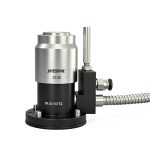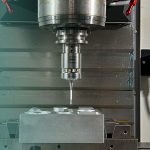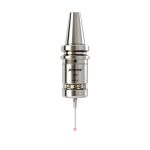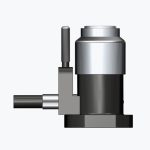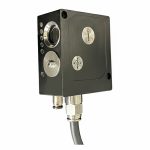
Comparing to the conventional contact broken tool detection systems, it improves process reliability, reduce cycle time, non-productive time and scrap, increase productivity and profit.
Highlights
Engineered for modern high-speed and high-precision machining environments, the detector significantly reduces scrap rates, prevents machine damage, and enhances overall production reliability.
- Cost-effective, fast and reliable.
- Ultra-quick detection: Typically spends 0.6s on each detection.
- Simple installation and set-up.
1. Non-Contact Laser Detection
Unlike traditional contact-type tool setters, this system uses a focused laser beam to scan the cutting tool. This eliminates mechanical wear on the device and ensures long-term stability and accuracy.
2. Ultra-Fast Inspection Cycle
Tool inspection is completed within milliseconds, making it ideal for high-speed machining applications where cycle time is critical.
3. High Accuracy & Repeatability
Capable of detecting micro tool breakage and wear, ensuring consistent machining quality even in precision industries such as aerospace and medical manufacturing.
4. Wide Tool Compatibility
Suitable for a variety of tools including:
- End mills
- Drill bits
- Taps
- Micro tools
5. Intelligent Signal Processing
Advanced algorithms filter out coolant, chips, and ambient light interference, ensuring reliable detection even in harsh machining environments.
6. Seamless CNC Integration
Compatible with major CNC control systems (Fanuc, Siemens, Mitsubishi, Heidenhain, etc.), enabling easy installation and operation.
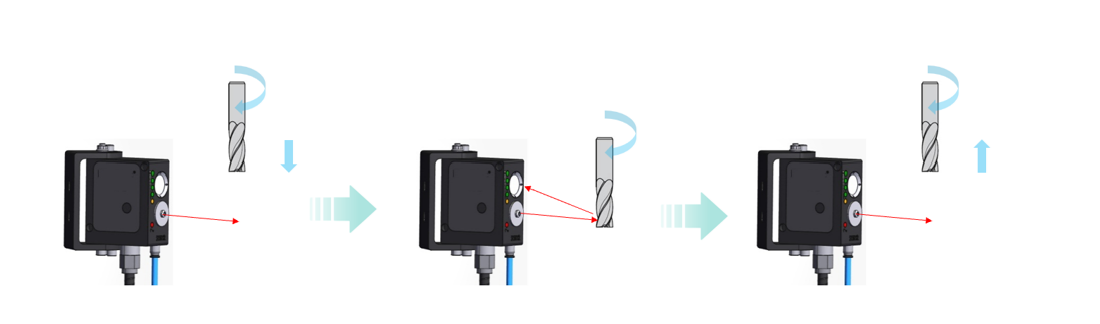
How it works
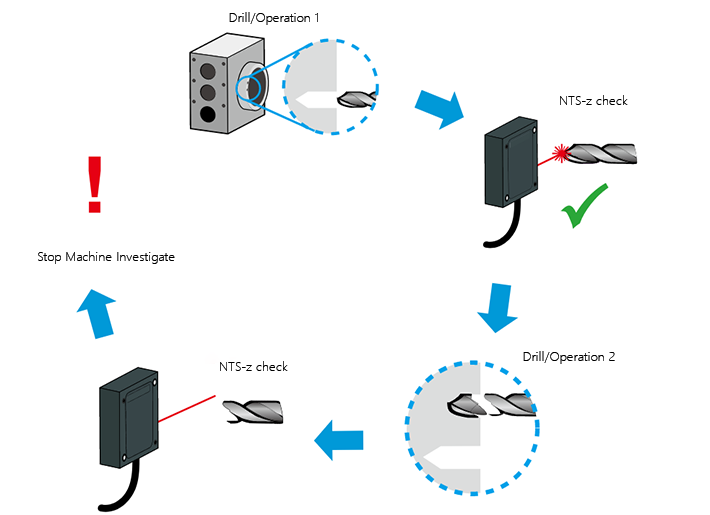
Typically, the laser beam is emitted from the unit and reflected off rotating tool, usually 3mm above the tool tip, and then back to the receiver. (Please refer to the below illustrations.)
The system projects a laser beam across a predefined detection zone. When a tool passes through this zone, the beam is interrupted. By analyzing the interruption pattern and comparing it with predefined tool parameters, the system determines:
- Tool presence
- Tool length deviation
- Tool breakage or chipping
If any abnormality is detected, the machine can automatically stop or trigger an alarm, preventing defective parts and potential damage.
1. Automated Production Lines
Ideal for unmanned or lights-out manufacturing where tool condition must be monitored continuously without operator intervention.
2. High-Speed CNC Machining Centers
Ensures tool integrity during high RPM operations, reducing the risk of catastrophic tool failure.
3. Precision Industries
Widely used in:
- Aerospace component manufacturing
- Automotive parts production
- Medical device machining
- Electronics and micro-machining
4. Multi-Tool Processes
In operations involving frequent tool changes, the system verifies each tool before machining begins, ensuring process reliability.
Product Specifications
| Size | Length | |
| Width | ||
| Height | 109mm | |
| Weight(Cable included) | 780g | |
| I/O | N/A | |
| Diameter of Tool Detection (Min.) | Ø0.2mm | |
| Detection Range | Adjustable between 400.0mm and 2.0m | |
| Supply Voltage | 12 Vdc to 24 Vdc | |
| Supply Current | 45 mA @12 Vdc, 27 mA @24 Vdc | |
| Output Signal | Status output Voltage-free solid-state relay (SSR) output, configurable normally open or normally closed | |
| Cable (to machine control) | Spec. | Ø4.85 mm, 5-core screened cable, each core 5*0.1 mm insulated. |
| Length | 5.0 m,10.0 m | |
| Electrical Connection | Cable on the underside of the unit | |
| Pneumatic Supply | Ø6.0mm air pipe(Pneumatic Supply Pressure: 0.2-0.35bar) | |
| Laser type | Class 2 laser product | |
| Laser beam alignment | The unit is supplied with an adjustable mounting bracket. | |
| Sealing | IP68 with air on | |
| IK Rating | IK06:2002 | |
| Mounting | Storage Temperature | -25 °C to +70 °C |
| Operating temperature | +5 °C to +55 °C | |
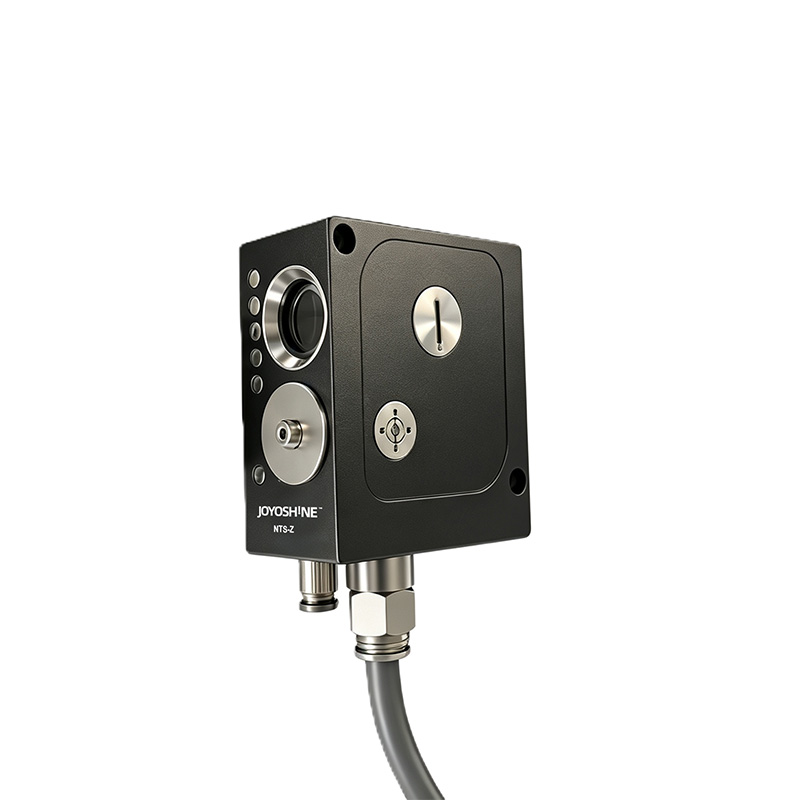
FAQ of NTS-Z Laser-Based Broken Tool Detector
You May Like
 Tool Setting Probe (CT-20)
- Stylus For Touch Probe
- What is a mill touch probe?
- Infrared vs. Radio Frequency Machine Tool Probes: A Comprehensive Buyer’s Guide
- IR Touch Probe (JPM50/JPM60)
- What is a cnc tool setter and how does it work?
- What is broken tool detection and why it matters in modern cnc machining?